Home › Sitework and Structural Concrete
We perform sitework and structural concrete in Atlanta, GA, including walls, piers, pads, and other load bearing elements. Our crews follow engineered designs and place reinforcement and anchors with precision. From site retaining walls to heavy equipment pads, we deliver structural concrete that supports your project safely.
Superior Concrete Atlanta provides professional structural concrete throughout Atlanta, GA, Georgia and the surrounding area. Our licensed, insured crew delivers safe, clean, on-time work with a free estimate before anything begins. Call (470) 748-3052 or request your free quote.
Sitework and Structural Concrete for Atlanta Properties
Structural concrete is what keeps your building standing, and the sitework beneath it determines how well it performs over time. At Superior Concrete Atlanta, we focus on both, so your slab, foundations, and flatwork are fully supported by properly prepared Georgia soils and drainage.
In metro Atlanta, we routinely work on projects ranging from new custom homes in Brookhaven and Smyrna to commercial buildouts in Midtown and industrial facilities on the south side. Clay-heavy soils, hilly lots, and older utilities are normal here, so our approach always starts with understanding your site conditions before we talk about slab thickness or reinforcement.
Whether you are adding a new building pad, replacing a failed slab, or tying a structural footing into an existing structure, our team plans the sitework and concrete as one system. That integrated approach reduces cracking, settlement, and moisture issues that are common in this region.
How We Evaluate Your Site in Atlanta, GA
Before any forming or pouring, Superior Concrete Atlanta carries out a site review tailored to local conditions. If you already have a geotechnical report, we work directly from that. If not, we visually inspect soils, check for evidence of fill, review grading and runoff paths, and look for signs of past movement such as cracks in nearby slabs, leaning fences, or uneven sidewalks.
Atlanta lots often have a mix of red clay and compacted fill from previous construction. We probe depths with hand tools and test compaction where needed. On older intown properties, we watch for abandoned footings, buried rubble, or unknown utilities that could interfere with new foundations.
Based on what we find, we decide how much undercutting is needed, whether soil replacement with structural fill makes sense, and what level of compaction and proof-rolling is required before concrete work begins. This upfront effort helps prevent slab settlement, heaving, and drainage problems that can show up years later if sitework is rushed.
Sitework: Excavation, Grading, and Drainage That Protect Your Concrete
Sitework is more than just moving dirt. For structural concrete to last in Atlanta’s climate, the subgrade needs to shed water and transfer loads evenly to the underlying soil.
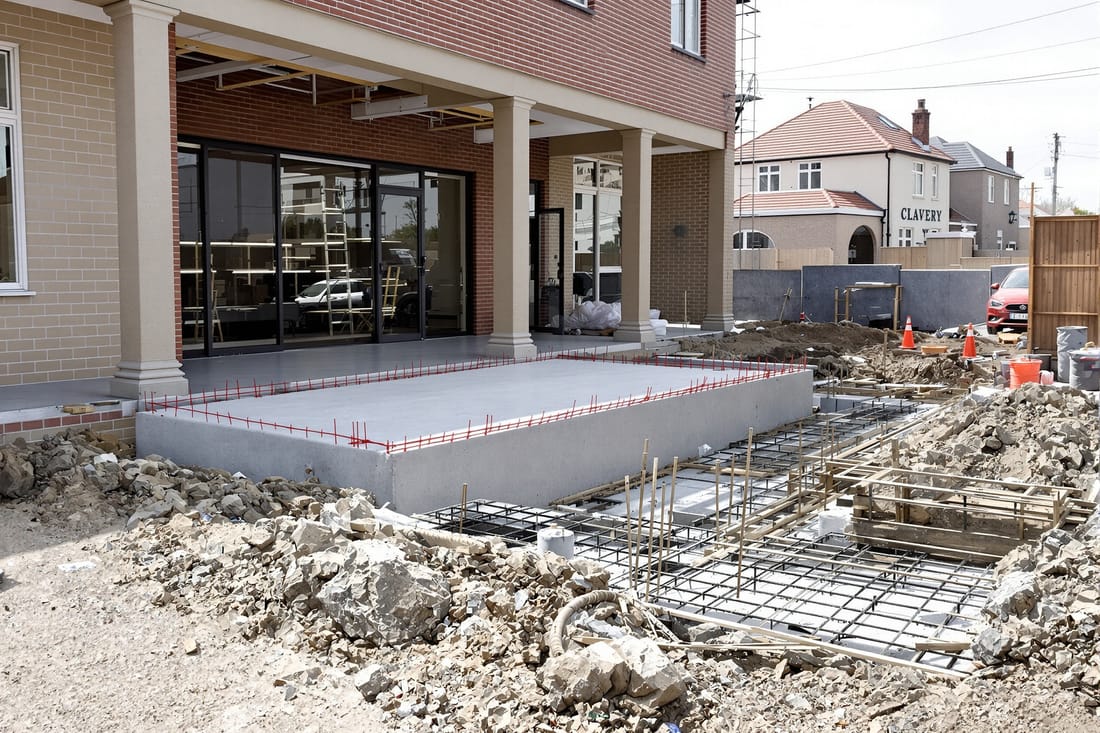
Our crews strip vegetation and topsoil from the building footprint, excavate for footings or thickened slabs, and dispose of unsuitable material. Where soils are soft or unstable, we undercut and replace with compacted, graded aggregate base. We compact in lifts with the right equipment for your site size, then verify compaction with field checks.
Grading is planned to direct water away from structures. Around slabs and foundations, we establish positive slope away from the building and, if needed, incorporate French drains, swales, or underdrains so that groundwater does not migrate under the slab. This is especially important in Atlanta neighborhoods with steep driveways and tight lot lines where surface runoff is concentrated.
On commercial projects, we coordinate with civil plans to match proposed elevations, ensure ADA transitions at entries, and maintain proper clearances for utilities and storm structures. The result is a prepared site that supports your structural concrete instead of fighting it.
Structural Concrete Options: Footings, Slabs, Walls, and Piers
Superior Concrete Atlanta places a full range of structural concrete, from conventional shallow foundations to heavily reinforced slabs and grade beams.
For foundations and footings, we form and pour continuous strip footings, isolated spread footings, and thickened-edge monolithic slabs depending on your design. In older parts of Atlanta where existing foundations are shallow or irregular, we can install new grade beams or underpinning piers to transfer loads to competent soil.
Slabs are tailored to use. A typical residential garage slab may be 4 inches thick with fiber and wire mesh, while a commercial or warehouse slab may be 6 inches or more with rebar mats, dowel baskets, and saw-cut joint layouts designed around rack loads or vehicle traffic. When expansive clay or heavy point loads are a concern, we discuss options like increased thickness, higher concrete strength, vapor barriers, and sub-slab drainage.
For structural walls and elevated elements, we use engineered formwork, rebar cages, and pour sequencing that meet or exceed plans. This includes retaining walls for Atlanta’s sloped lots, elevator pits, equipment pads, loading docks, and stair foundations. Every pour is matched to specified mix designs, slump, and reinforcement so you get predictable structural performance.
How We Reinforce and Place Structural Concrete
The way structural concrete is reinforced and installed has as much impact on durability as the mix itself. We start with detailed layout of rebar according to your engineer’s drawings, then tie steel on proper chairs so coverage is maintained during the pour. For work that must tie into existing concrete, such as additions or loading docks, we drill and epoxy dowels so loads are transferred correctly.
We coordinate ready-mix deliveries around Atlanta traffic patterns, which is important for large pours downtown and along congested corridors. Concrete placement is done with chute, pump, or buggy depending on access. During placement, we consolidate with internal or external vibration where required to reduce voids, especially around congested reinforcement and embedded items.
Finishing is selected to match use. Broom finishes for exterior slabs and drive lanes, troweled or hard-troweled finishes for interior floors, and specialty textures on ramps or loading areas where slip resistance is critical. We saw-cut joints on a schedule that fits the slab size and reinforcement, typically within 6 to 18 hours, to control cracking and align joints with columns, walls, and equipment pads.
Curing is managed intentionally, which is often skipped by less experienced contractors. Depending on temperature and wind, we may use curing compounds, wet coverings, or extended moist curing for heavily loaded slabs, so the concrete develops its designed strength and resists surface dusting.
Typical Issues in Atlanta and How We Prevent Them
Atlanta’s climate and soil create predictable challenges for structural concrete. The combination of heavy summer storms, clay soils, and temperature swings leads to three main issues: moisture problems, settlement, and cracking.
To combat moisture, we focus on drainage in sitework, use vapor barriers under interior slabs where specified, and slope exterior concrete away from structures. This reduces slab curling, interior moisture issues, and freeze-thaw damage in shaded or poorly drained areas.
Settlement is often tied to improperly compacted fill or buried debris from earlier construction. We reduce risk by removing unsuitable material, compacting in thin lifts, and avoiding the temptation to build over soft spots. On suspect lots, we may recommend geotechnical testing or deepened foundations and piers.
All concrete cracks to some extent, but we limit and control cracking through proper joint layout, reinforcement placement, and curing. We also educate owners about what is cosmetic and what is structural. If you have an existing slab or foundation that is already showing movement, Superior Concrete Atlanta can assess whether repair, replacement, or supplemental structural elements are the best solution and explain the trade-offs in cost and disruption.
What Affects Cost and How to Plan Your Project
Structural concrete and sitework costs in Atlanta are driven by more than just square footage. The biggest factors are access, soil conditions, reinforcement requirements, and the complexity of forming.
Hard-to-reach backyards in intown neighborhoods may require smaller equipment or concrete pumping, which affects labor and equipment costs. Deep footings, heavy rebar, or thicker slabs driven by engineering requirements will increase material and install time, but they are often necessary for long-term performance.
Unknowns like buried rubble, existing utilities, or undocumented fill can also influence cost. We recommend budgeting for a reasonable contingency on older properties and being prepared to make decisions if site conditions differ from what plans assumed.
Superior Concrete Atlanta provides detailed, line-item proposals that separate sitework, foundations, slabs, and optional features like vapor barriers or enhanced finishes. During preconstruction, we walk you through alternate approaches when they exist, such as changing slab thickness, reinforcement type, or drainage solutions, so you can make informed choices about performance versus budget.
By involving us early, you can often reduce surprises, shorten your build schedule, and get structural concrete that matches how your property will actually be used, not just what looks good on paper.